

I built my own personal agent, so I wouldn’t have to trust someone else’s.
Every personal-AI product wants your whole life in its cloud. DaySlice is my answer: a privacy-first agent I’m building for myself. My data, on my device, owned end to end. The decision, and the trade

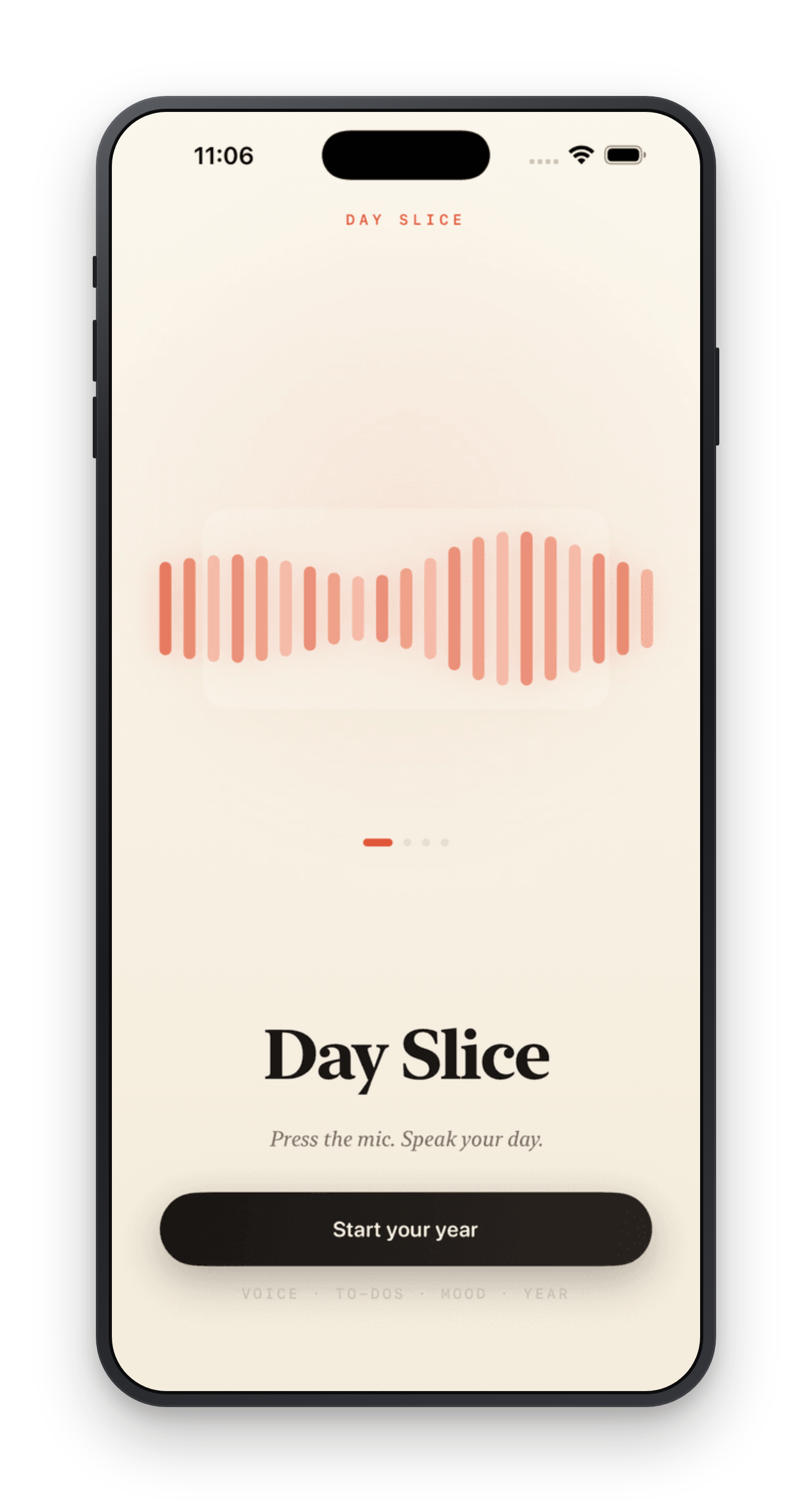
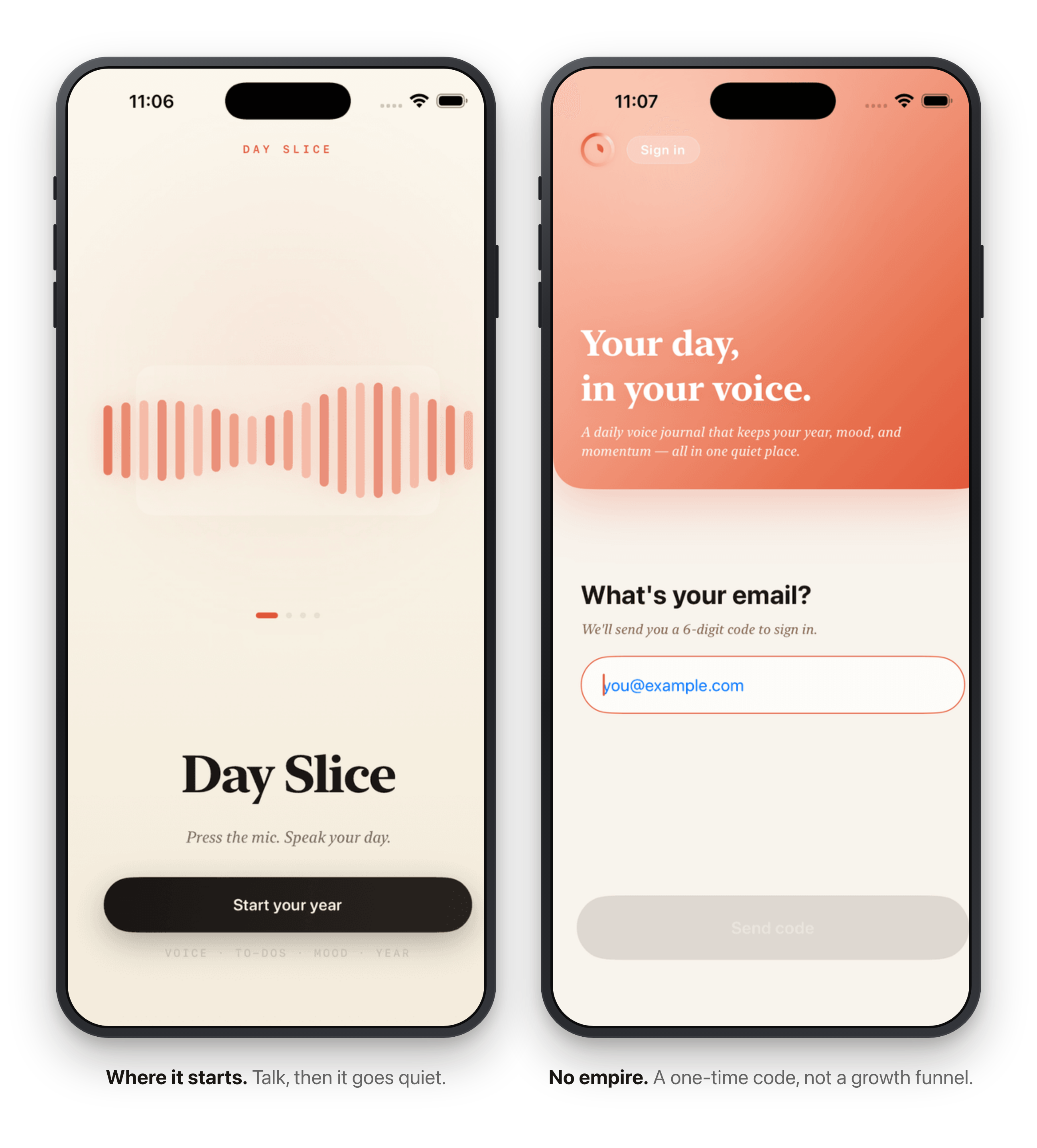
Where it starts. Your day, in your voice. The whole interaction is talking, then it goes quiet again.
Every personal-AI product wants the same thing: your whole life. Your notes, your calendar, your voice, your patterns. The price is handing all of it to someone else’s cloud, running on someone else’s incentives. I didn’t want to pay it. So I’m building DaySlice for myself: a privacy-first personal agent. My data, on my device, owned end to end. It’s in-flight and deliberately small. This is the decision behind it, not the feature list.
Why build my own?
Personal agents are about to be everywhere, and every one of them runs on the same bargain: give us everything, your messages, your habits, your voice, and we’ll make your life easier. It’s true that an assistant has to know you to be useful. But “know you” and “own your data” usually arrive in the same box. Hosted on someone else’s servers, tuned to someone else’s business model.
I wasn’t willing to make that trade with the most personal data I have. So I made a different product decision: build the agent myself, for an audience of one. Mine, on my device, answering to me. DaySlice started as a voice-first journal where restraint was the whole point, and grew into the privacy-first personal agent I wanted to exist. Nobody else was going to build it on my terms.
Four decisions, not features
Each of these is a choice about what to value, and each is the opposite of what the big personal-AI products choose. They aren’t features you toggle. They’re the premise.
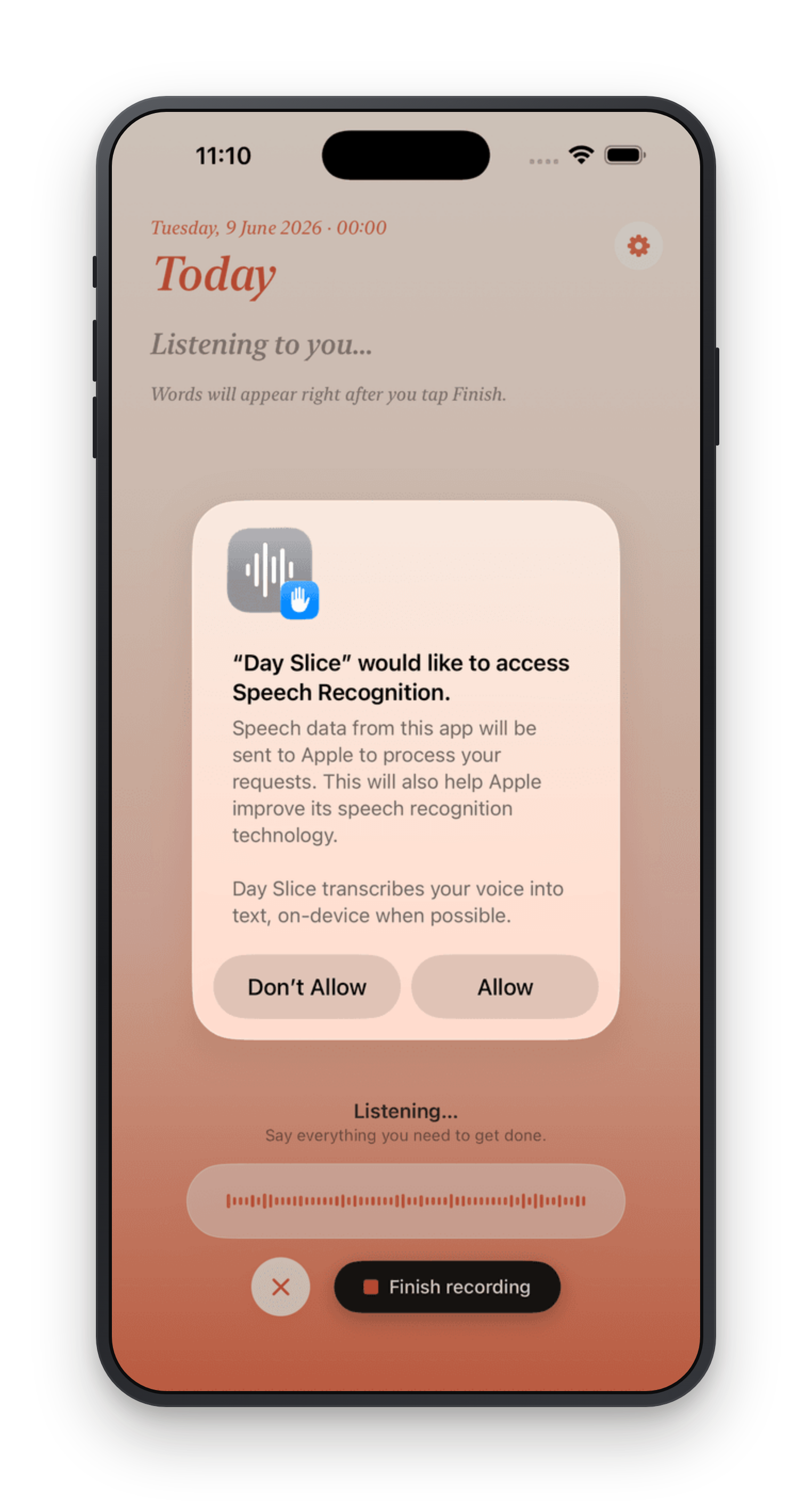
Private by default - my data stays with me.
Built to keep my information on my device, not parked in a cloud I don’t control. Privacy is the starting point everything else has to respect, not a setting buried three menus deep. Even speech is a permission I grant on my own device. The recording doesn’t leave to be processed somewhere else.
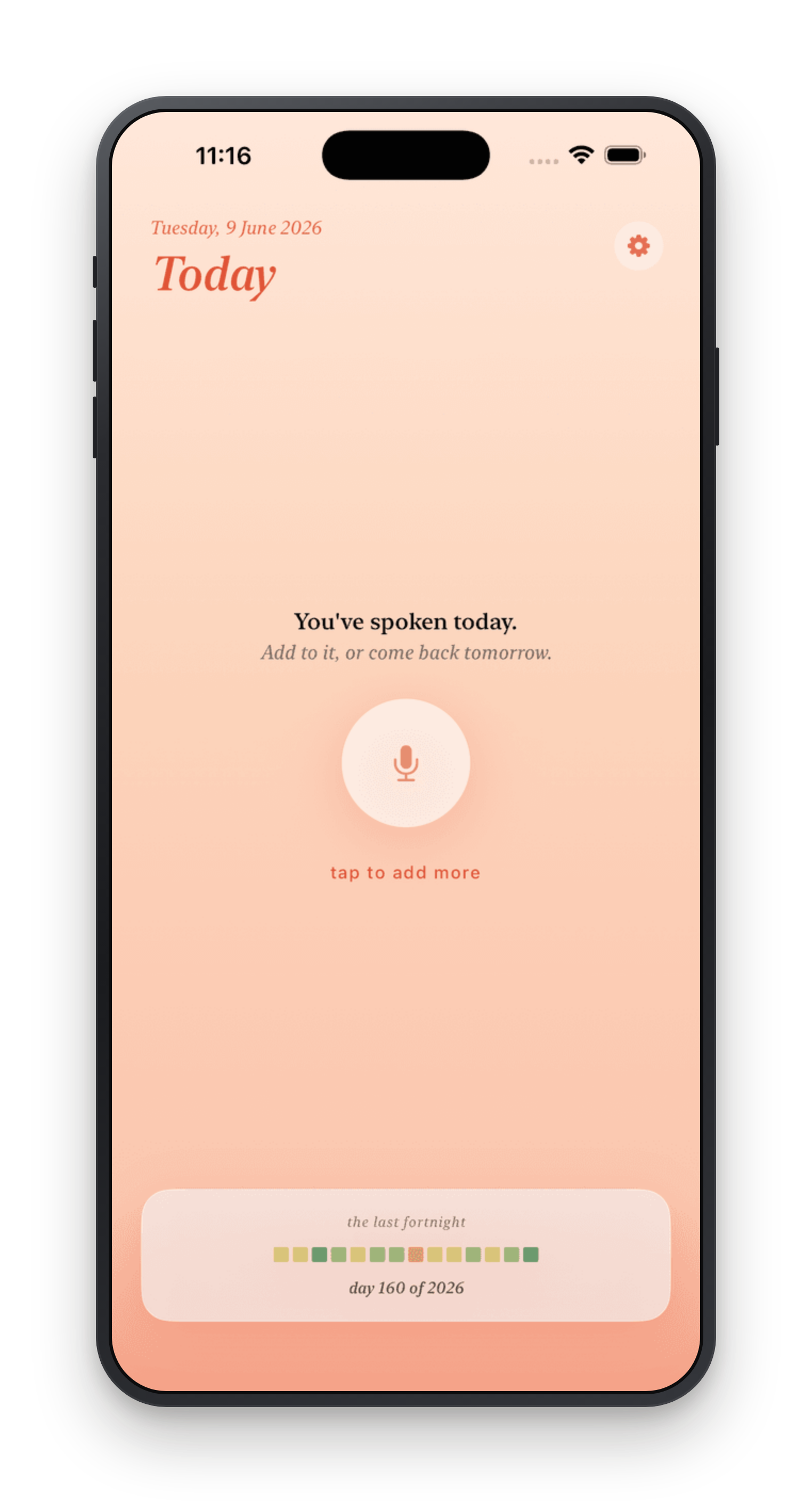
Restraint is the product - it does less, on purpose.
It began as a journal where the whole discipline was subtraction, and that stuck. It respects your attention instead of fighting for it. The everyday screen is almost empty: you’ve spoken today, or you haven’t. Nothing else competes for the space.
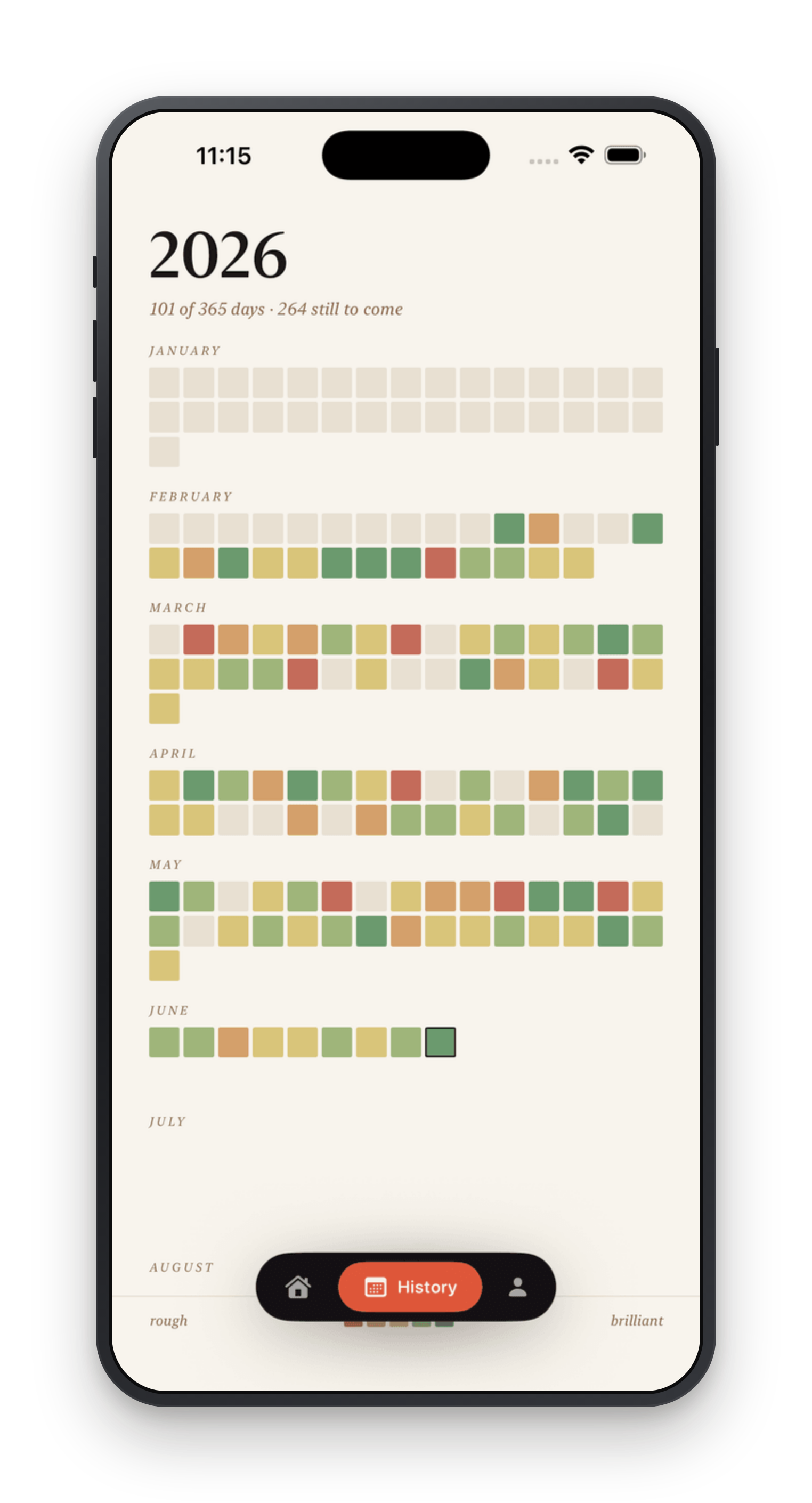
Owned end to end - it answers to me.
No ad model, no growth team, no roadmap quietly pulling it somewhere I didn’t ask for. The only incentive it serves is mine. A whole year of my days lives in one place I control. It’s mine to keep.
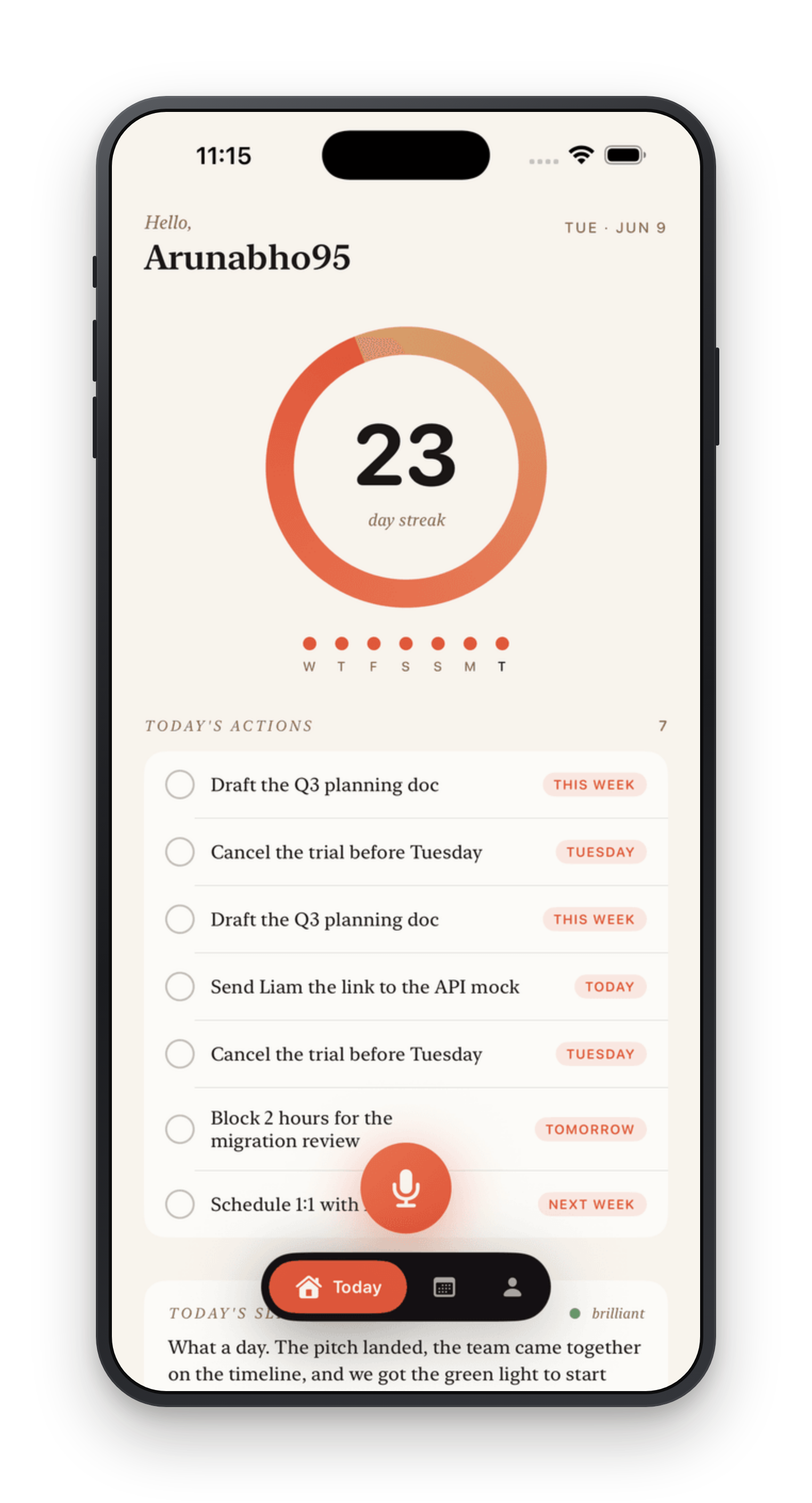
Built for one - an audience of me.
Designed for a single user, so I never average a decision down to suit everyone. I’m the only user, and I feel every rough edge daily. I can’t lie to myself about whether it’s good. That’s literally my handle on the screen. It speaks back my day, my streak, and the actions it pulled from it.
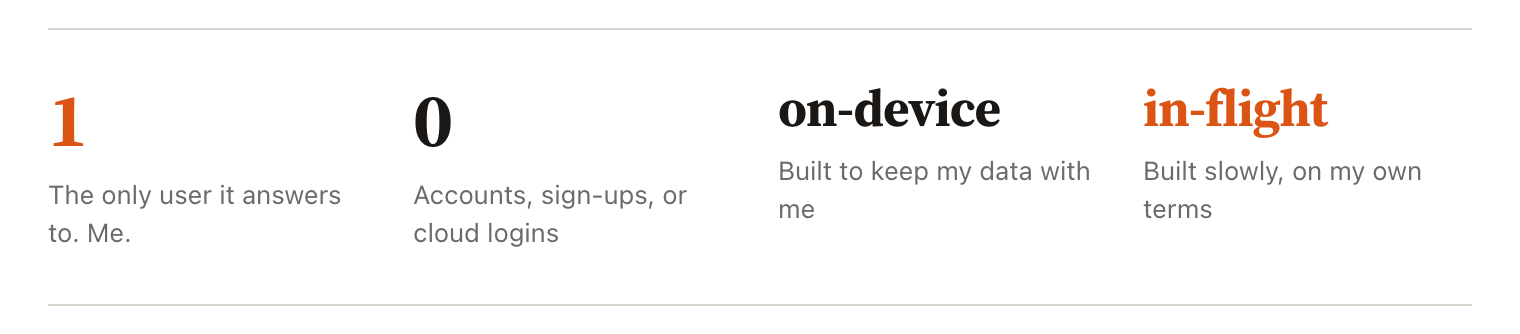
What building your own costs
This isn’t free. The big products are polished and full-featured because hundreds of people work on them, and because your data feeds them. Mine is slower and smaller and in-flight. I’m the designer, the PM, and the iOS developer, and I’m the user finding every rough edge myself.
But that’s the point. What I get back is trust. I know exactly what it does with my data, because I built every part of it. For a tool meant to hold your whole life, trust is the feature I actually needed.
A personal agent is only worth using if you trust it. The most direct way to trust one is to build it yourself.
The decision, in one sentence
Why it’s worth doing slowly
Building it teaches me things using someone else’s never would: on-device constraints, what an agent should and shouldn’t do on your behalf, how little it actually takes to be useful. That learning is half the reason it exists.
DaySlice is still in-flight, and I’m fine with that. Being the only user is the advantage here. I build exactly the agent I’d trust.